Rolling Iron Condors: When to Adjust, When to Close, and When to Hold
Rolling Iron Condors: When to Adjust, When to Close, and When to Hold Rolling Iron Condors: When to Adjust, When to Close, and When to Hold The iron condor, a staple in many options traders' portfolios, is renowned for its ability to generate consistent income in range-bound mark
Abstract
Rolling Iron Condors: When to Adjust, When to Close, and When to Hold Rolling Iron Condors: When to Adjust, When to Close, and When to Hold The iron condor, a staple in many options traders' portfolios, is renowned for its ability to generate consistent income in range-bound mark
Rolling Iron Condors: When to Adjust, When to Close, and When to Hold
The iron condor, a staple in many options traders' portfolios, is renowned for its ability to generate consistent income in range-bound markets. It's a non-directional strategy that thrives on time decay (theta) and decreasing implied volatility. However, even the most meticulously planned iron condor can find itself under pressure when the underlying asset decides to break out of its expected range. This is where the art and science of options adjustment truly shine.
At Volatility Anomaly, we constantly emphasize that entering a trade is only half the battle; managing it effectively is what separates consistent profitability from sporadic gains. For iron condors, this often means navigating the complex decision tree of whether to adjust, close, or simply hold your position. This comprehensive guide will delve into the nuances of rolling iron condors, providing actionable insights and specific examples to empower you to make informed decisions when your trades deviate from the ideal. We'll explore three primary scenarios for rolling: rolling for credit, rolling to avoid assignment, and rolling to extend duration, equipping you with the tools to adapt to evolving market conditions and optimize your iron condor management.
Background & Context: The Dynamic Nature of Iron Condors
An iron condor is a defined-risk, credit-spread strategy constructed by simultaneously selling an out-of-the-money (OTM) call spread and an OTM put spread on the same underlying asset and expiration date. The goal is for the underlying asset to remain between the two short strikes until expiration, allowing both spreads to expire worthless and capturing the full premium received. For instance, on a stock trading at $100, a trader might sell the 90/95 put spread and the 105/110 call spread, aiming for the stock to stay between $95 and $105.
While conceptually simple, the reality of trading iron condors is far from static. Market conditions are constantly shifting, and what looked like a perfectly balanced trade at entry can quickly become unbalanced. Implied volatility (IV) can spike or crash, earnings reports can cause unexpected price swings, or broader market sentiment can shift dramatically. Consider the current market environment: the VIX, a key indicator of market fear, might be hovering around 15, suggesting relative calm. However, a sudden geopolitical event or an unexpected inflation report could send the VIX surging to 25 or even 30, dramatically impacting option prices and the probabilities associated with your strikes.
At Volatility Anomaly, our automated screener often identifies iron condor opportunities on high-IV rank stocks (e.g., IV Rank > 50%) where the market is pricing in larger moves than historical data might suggest. This can lead to attractive premium collection. However, these higher IV environments also mean that the underlying asset has a greater probability of making a significant move, potentially challenging one side of your condor.
The decision to adjust, close, or hold is critical. Holding a losing position too long can lead to maximum loss, while adjusting prematurely or incorrectly can compound losses or reduce potential gains. Closing a trade too early might leave money on the table, especially if the underlying reverses course. This article aims to provide a robust framework for making these decisions, focusing on the practical application of options adjustment techniques for iron condors.
Core Concept Deep Dive: The Three Pillars of Rolling Iron Condors
Rolling an iron condor involves closing the existing position and opening a new one, often with different strikes or expiration dates. This isn't a single maneuver but a collection of strategies employed for distinct purposes. We'll explore the three most common scenarios for iron condor management through rolling.
1. Rolling for Credit: Extending Duration and Reducing Risk
This is perhaps the most common reason to roll an iron condor. When one side of your condor is being challenged (e.g., the stock is moving towards your short call strike), rolling for credit involves moving the entire condor (or just the challenged side) further out in time, and potentially further out-of-the-money, while simultaneously collecting additional premium.
-
When to Consider:
- The underlying has moved significantly towards one of your short strikes (e.g., the short strike delta approaches 0.30-0.35, or the underlying breaches the long strike of the challenged spread).
- You still believe the underlying will eventually revert to your desired range or at least stabilize.
- There's sufficient time until expiration (e.g., 20-30 days or more) to allow the adjustment to work and for time decay to continue.
- You can collect a meaningful net credit for the roll (e.g., 1/3 to 1/2 of the original credit received).
-
Mechanism:
You buy back your existing iron condor (at a debit) and simultaneously sell a new iron condor with a later expiration date and/or wider strikes (at a larger credit). The goal is to receive a net credit for the entire transaction. This credit increases your maximum potential profit and provides a larger buffer against further adverse moves.
-
Example:
Let's say you sold an iron condor on SPY with 45 DTE (Days To Expiration) when SPY was at $450.
Original Trade:- Sell 435/440 Put Spread
- Sell 460/465 Call Spread
- Credit Received: $1.80 ($180 per contract)
- Max Risk: $3.20 ($320 per contract)
- Breakevens: $438.20 and $461.80
A week later, SPY rallies sharply to $458. The 460/465 call spread is now being challenged. The 460 call delta might be around 0.32. You decide to roll the entire condor.
Adjustment (Roll for Credit):
- Buy back original 435/440 Put Spread and 460/465 Call Spread (current debit for closing: $2.50)
- Sell new iron condor with 60 DTE:
- Sell 440/445 Put Spread
- Sell 468/473 Call Spread
- Credit Received for new condor: $2.80
Net Credit for the Roll: $2.80 (new credit) - $2.50 (old debit) = $0.30.
Total Credit Received: $1.80 (original) + $0.30 (roll) = $2.10.
This roll extended the duration, moved the call side further OTM, and increased the total credit, thus widening the profit range and lowering the breakevens.
2. Rolling to Avoid Assignment: Managing Extreme Moves
This type of roll is typically employed when the underlying asset has moved significantly against one side of your condor, pushing your short strike deep in-the-money (ITM). The primary goal here is to prevent assignment, which can lead to significant capital requirements or unwanted stock positions.
-
When to Consider:
- Your short strike is significantly ITM (e.g., the short strike delta is 0.70 or higher), and expiration is approaching (e.g., less than 7 DTE).
- The cost to close the challenged spread is becoming prohibitive, but rolling can still salvage some value or prevent a larger loss.
- You anticipate a potential reversal or stabilization, but need to buy time and move the strike further away.
-
Mechanism:
This often involves rolling only the challenged side of the condor. For instance, if your short call is ITM, you would buy back the existing call spread and sell a new call spread with a later expiration and/or higher strikes, ideally collecting a credit or at least minimizing the debit. The put spread might be left untouched or rolled separately.
-
Example:
You sold an iron condor on AAPL with 30 DTE when AAPL was at $170.
Original Trade:- Sell 160/165 Put Spread
- Sell 175/180 Call Spread
- Credit Received: $1.50
Two weeks later, AAPL announces stellar earnings and gaps up to $182. Your 175/180 call spread is now deep ITM, and there are only 16 DTE left. The 175 call delta is now around 0.85. You want to avoid assignment on the 175 short call.
Adjustment (Roll to Avoid Assignment - Call Side Only):
- Buy back the 175/180 Call Spread (current debit for closing: $7.50)
- Sell a new 185/190 Call Spread with 45 DTE (credit received for new spread: $3.00)
Net Debit for this roll: $7.50 (old debit) - $3.00 (new credit) = $4.50.
This is a significant debit, but it prevents immediate assignment and gives the trade more time. Your total P&L is now -$3.00 ($1.50 original credit - $4.50 debit for roll). The put spread (160/165) is likely worthless or near worthless and could be closed for a small credit or left to expire. This roll effectively transforms the challenged call spread into a new, further OTM spread, buying time and potentially allowing for a recovery or further adjustment.
3. Rolling to Extend Duration: Buying Time for Theta
Sometimes, an iron condor isn't necessarily challenged, but it's not performing as quickly as anticipated, or you simply want to extend the trade to capture more time decay. This roll is less about defensive action and more about optimizing for theta.
-
When to Consider:
- The underlying is still within your profit range, but time decay has slowed down significantly (e.g., less than 10-15 DTE remaining).
- You haven't reached your profit target (e.g., 50-75% of max profit), but the market is still favorable for the strategy.
- You want to maintain exposure to the underlying for a longer period without opening a completely new trade.
-
Mechanism:
You buy back the existing iron condor and sell a new one with the same or similar strikes but a later expiration date, ideally collecting a small net credit.
-
Example:
You sold an iron condor on QQQ with 40 DTE when QQQ was at $370.
Original Trade:- Sell 355/360 Put Spread
- Sell 380/385 Call Spread
- Credit Received: $2.00
With 10 DTE remaining, QQQ is at $372, well within your profit range. You've captured about $1.20 of the $2.00 credit (60% profit), but you believe QQQ will remain range-bound and want to capture more theta.
Adjustment (Roll to Extend Duration):
- Buy back original 355/360 Put Spread and 380/385 Call Spread (current debit for closing: $0.80)
- Sell new iron condor with 45 DTE (same strikes):
- Sell 355/360 Put Spread
- Sell 380/385 Call Spread
- Credit Received for new condor: $2.10
Net Credit for the Roll: $2.10 (new credit) - $0.80 (old debit) = $1.30.
Total Credit Received: $2.00 (original) + $1.30 (roll) = $3.30.
This roll effectively "restarts" the trade, extending the duration and collecting additional premium, increasing your total potential profit. Your breakevens are also adjusted favorably due to the increased credit.
Practical Application: A Worked Example with SPY
Let's walk through a complete lifecycle of an iron condor trade on SPY, including entry, management, and exit decisions.
Entry: The Initial Setup
Imagine it's early March, and SPY is trading around $508. The VIX is relatively low at 14.5, and SPY's IV Rank is around 30%, suggesting a stable environment. Our Volatility Anomaly screener identifies SPY as a candidate for an iron condor, targeting the April 19th expiration (45 DTE). We aim for deltas around 0.15-0.20 for our short strikes.
- Underlying: SPY at $508.00
- Expiration: April 19th (45 DTE)
- Trade: Sell Iron Condor
- Put Spread: Sell 490 Put (delta ~0.18), Buy 485 Put
- Call Spread: Sell 525 Call (delta ~0.17), Buy 530 Call
- Net Credit Received: $1.95 ($195 per contract)
- Max Risk: $5.00 (spread width) - $1.95 (credit) = $3.05 ($305 per contract)
- Breakeven Points: $490 - $1.95 = $488.05 (lower); $525 + $1.95 = $526.95 (upper)
Management Scenario 1: SPY Rallies, Challenging the Call Side
Two weeks into the trade (29 DTE remaining), SPY has rallied to $519. The 525 short call's delta has increased to 0.30. While still OTM, it's getting close to our upper breakeven. We decide to roll for credit to give the trade more room and time.
- Current SPY Price: $519.00
- DTE Remaining: 29
- Action: Roll the entire iron condor to the next monthly expiration (May 17th, 60 DTE).
- Close Original Condor: Buy back 490/485 Put Spread and 525/530 Call Spread for a debit of $2.50.
- Open New Condor (May 17th, 60 DTE):
- Sell 500 Put (delta ~0.15), Buy 495 Put
- Sell 535 Call (delta ~0.15), Buy 540 Call
- New Credit Received: $2.90
- Net Credit for Roll: $2.90 (new) - $2.50 (old) = $0.40
- Total Credit Received: $1.95 (original) + $0.40 (roll) = $2.35
- New Breakevens: $500 - $2.35 = $497.65; $535 + $2.35 = $537.35
Analysis: This roll extended the duration by 31 days and moved the call side 10 points higher, while also moving the put side 10 points higher (as SPY had moved up). We collected an additional $0.40, increasing our total credit and widening our overall profit range. The new short call delta is back to a comfortable 0.15.
Management Scenario 2: SPY Continues to Rally, Threatening Assignment
Another two weeks pass (46 DTE remaining on the rolled condor). SPY has continued its ascent, now trading at $536. The 535 short call is now slightly ITM, and its delta is around 0.55. We are approaching our upper breakeven of $537.35. While assignment isn't imminent with 46 DTE, the position is under significant stress, and we want to prevent further losses and potential assignment. We decide to roll only the call spread further out and further in time.
- Current SPY Price: $536.00
- DTE Remaining: 46
- Action: Roll only the challenged call spread.
- Close Original Call Spread: Buy back 535/540 Call Spread (May 17th) for a debit of $3.50.
- Open New Call Spread (June 21st, 75 DTE):
- Sell 545 Call (delta ~0.20), Buy 550 Call
- New Credit Received: $2.10
- Net Debit for Roll: $3.50 (old) - $2.10 (new) = $1.40
- Total Credit Received (Adjusted): $2.35 (previous total) - $1.40 (debit for roll) = $0.95
- New Breakevens: $497.65 (lower, from put side); $545 + $0.95 = $545.95 (upper, from new call side)
Analysis: This was a defensive roll. We took a debit of $1.40 for this specific adjustment, reducing our overall credit from $2.35 to $0.95. However, we moved the call side 10 points higher and extended duration by another 29 days, significantly reducing the risk of assignment and giving the trade more time to potentially recover. The put spread (500/495) is now very far OTM and could be closed for a small credit or left to expire.
Exit: Closing for Profit or Loss
Let's assume after the second adjustment, SPY stabilizes and slowly drifts back down to $530 over the next few weeks. With 20 DTE remaining on the June 21st options, our position looks much better.
- Current SPY Price: $530.00
- DTE Remaining: 20 (June 21st options)
- P&L at this point:
- Put Spread (May 17th 500/495): Expired worthless or closed for minimal cost. Let's assume it expired for $0.
- Call Spread (June 21st 545/550): Now far OTM. Let's say it can be bought back for $0.30.
- Action: Close the remaining call spread.
- Total Credit Captured: $0.95 (after all adjustments)
- Cost to Close: $0.30
- Net Profit: $0.95 - $0.30 = $0.65 ($65 per contract)
Analysis: Despite two challenging rallies and two adjustments, we managed to salvage a profit of $65 per contract. This demonstrates the power of active iron condor management. Without the rolls, the first rally to $519 would have put the trade in a significant loss, and the rally to $536 would have likely resulted in max loss or assignment.
Risk Management: Protecting Your Capital
While rolling can be a powerful tool, it's not a panacea. Every adjustment carries its own risks and costs. Effective options adjustment for iron condors requires a strong risk management framework.
1. Define Your Max Loss Tolerance Before Entry
Know your maximum acceptable loss for the entire trade, including potential adjustment costs. For an iron condor, the maximum loss is the width of the spread minus the credit received. If you're trading a $5 wide spread and receive $1.50, your max loss is $3.50. If the trade goes significantly against you, and the cost to roll would push your total loss beyond your comfort zone, closing the trade for a defined loss is often the wisest decision.
2. Set Clear Adjustment Triggers
Don't wait until the last minute. Establish clear rules for when to consider an adjustment. Common triggers include:
- Delta of Short Strike: If the short strike delta approaches 0.30-0.35, the probability of it going ITM increases significantly.
- Underlying Price Breach: If the underlying breaches the long strike of your challenged spread.
- P&L Threshold: If the unrealized loss on the trade reaches a certain percentage of your max profit or max loss (e.g., 1.5x the credit received).
- Days to Expiration (DTE): As DTE dwindles, adjustments become more expensive and less effective.
Our position monitoring tools can help you track these metrics in real-time.
3. Avoid "Chasing" the Market
Don't continuously roll for small credits or large debits just to stay in a losing trade. If the underlying asset has fundamentally changed its trend or volatility regime, a series of rolls might simply compound losses. There comes a point where cutting your losses and moving on to a new, higher-probability trade is the best course of action.
4. Be Mindful of Commission and Slippage
Each roll involves closing an existing spread and opening a new one, incurring commissions and potential slippage. While these costs might seem small individually, they can add up, especially if multiple adjustments are made. Always factor these into your P&L calculations.
5. Understand the Impact on Breakevens
Every roll affects your breakeven points. Rolling for a net credit will widen your profit range or move your breakevens favorably. Rolling for a net debit will narrow your profit range or move your breakevens unfavorably. Always recalculate your breakevens after an adjustment to understand your new risk profile.
Advanced Considerations: Beyond the Basics
For experienced traders, iron condor management can involve more sophisticated techniques.
1. Skew and IV Percentile
When rolling, pay close attention to the implied volatility skew. If one side of the market (e.g., calls) has significantly higher IV than the other (puts), you might be able to roll for a better credit by moving strikes where IV is relatively higher. Our Volatility Anomaly screener highlights IV rank and percentile, which are crucial for identifying these opportunities. For instance, if a stock's IV Rank is 80%, indicating high relative volatility, rolling can sometimes capture substantial additional premium.
2. Diagonal Rolls and Calendar Spreads
Instead of rolling to a new iron condor with the same expiration, consider a diagonal roll. This involves moving the challenged spread to a different expiration month while keeping the other spread in the original month. This effectively transforms part of your iron condor into a calendar spread, which benefits from time decay differences between the two expirations. For example, if your call spread is challenged, you might buy back the short call and sell a new short call in a later month, creating a diagonal call spread.
3. Inverting the Condor
In extreme cases, if the underlying blows through both your short strikes and is now trading between your long strikes, you might consider "inverting" the condor. This involves rolling the challenged spread past the other side, effectively transforming it into a double calendar or a more complex structure. This is an advanced technique and typically only considered when the original trade is severely distressed, and you're trying to salvage premium or avoid max loss.
4. Hedging with Futures or Stock
For very large iron condor positions, especially on indices like SPY or QQQ, some traders might choose to hedge their delta exposure by buying or selling a small amount of futures contracts or the underlying stock. This can temporarily neutralize the directional risk while you decide on a more permanent options adjustment. This is particularly useful when the VIX is spiking (e.g., from 15 to 25), causing rapid price movements that make options adjustments expensive.
5. The "Good Until Cancelled" (GTC) Roll Order
Some brokers allow you to place a GTC order that simultaneously closes your current spread and opens a new one, contingent on receiving a specified net credit. This can automate your options adjustment process, allowing you to react quickly to market moves without constant monitoring. However, always be cautious with automated orders and ensure your parameters are well-defined.
Conclusion & Key Takeaways
Iron condors are powerful income-generating strategies, but their success hinges on proactive and intelligent management. The decision to roll, close, or hold is a critical one that can significantly impact your profitability. By understanding the three primary types of rolls—for credit, to avoid assignment, and to extend duration—traders can adapt to changing market conditions and navigate adverse price movements with greater confidence. Remember, an adjustment is not a failure; it's a strategic maneuver to optimize your position and protect your capital. At Volatility Anomaly, we believe that mastering these iron condor management techniques is essential for long-term success in options trading.
Key Takeaways for Iron Condor Management:
- Proactive Management is Key: Don't wait for your iron condor to be severely challenged. Set clear triggers (e.g., short strike delta > 0.30-0.35) for considering adjustments.
- Rolling for Credit: This is the most common adjustment, used to extend duration, move strikes further OTM, and collect additional premium when one side is challenged but you still believe in the range.
- Rolling to Avoid Assignment: Employ this when a short strike is deep ITM and expiration is near. The goal is to prevent assignment, even if it means taking a debit on the roll.
- Rolling to Extend Duration: Use this to capture more time decay when the underlying is within range, but you haven't hit your profit target and want to maintain exposure.
- Know When to Close: Not every trade can be saved. If the cost of rolling exceeds your risk tolerance or the market has fundamentally shifted against your thesis, close the trade and move on.
- Factor in Costs & Breakevens: Always account for commissions, slippage, and recalculate your breakeven points after any adjustment to understand your new risk/reward profile.
- Utilize Advanced Tools: Leverage resources like Volatility Anomaly's screener and position monitoring to track IV rank, deltas, and P&L, aiding in timely and informed decision-making.
#VolatilityAnomaly · #IVRank · #OptionsTrading · #VRP
You Might Also Like
Volatility Anomaly
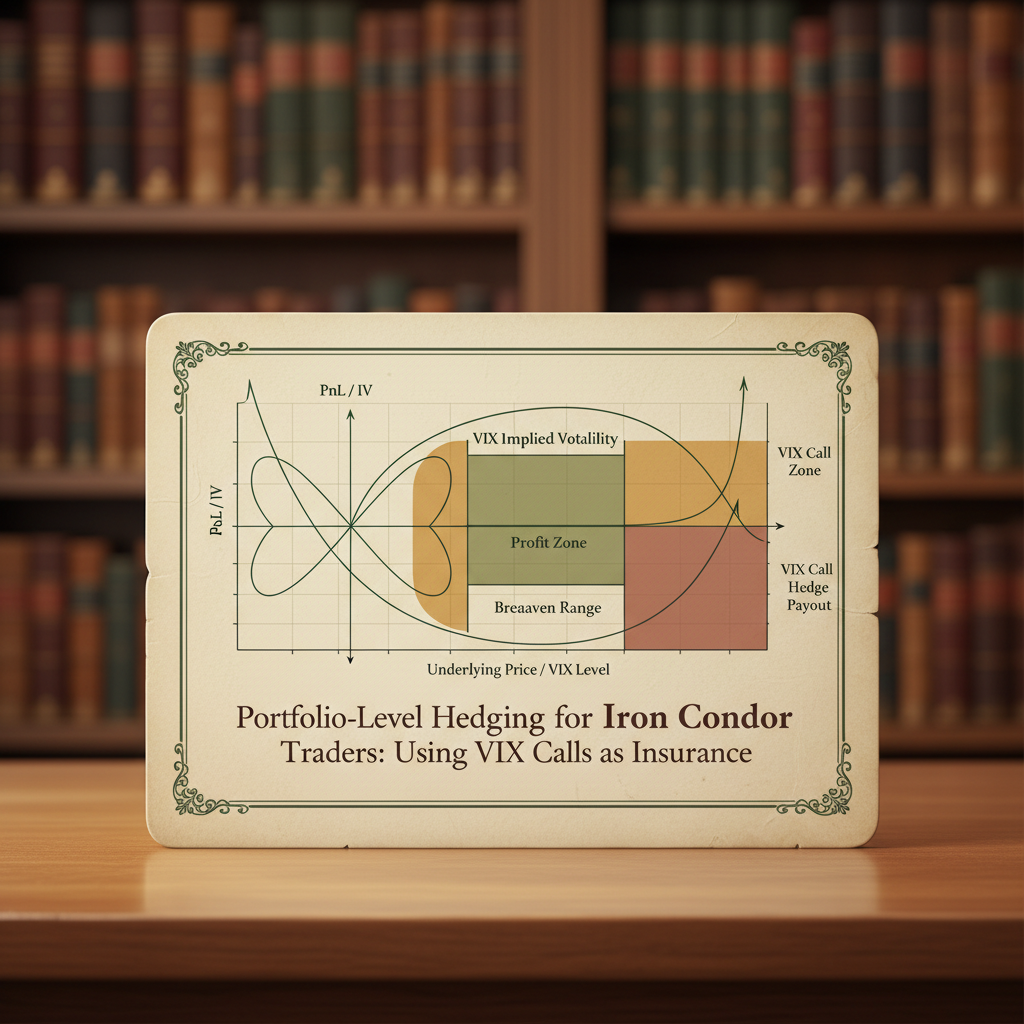
Portfolio-Level Hedging for Iron Condor Traders: Using VIX Calls as Insurance
Portfolio-Level Hedging for Iron Condor Traders: Using VIX Calls as Insurance Portfolio-Level Hedging for Iron Condor Traders: Using VIX Calls as Insurance In the world of options trading, strategies like the Iron Condor are highly popular for their ability to generate consistent
Jan 1970
Volatility Anomaly
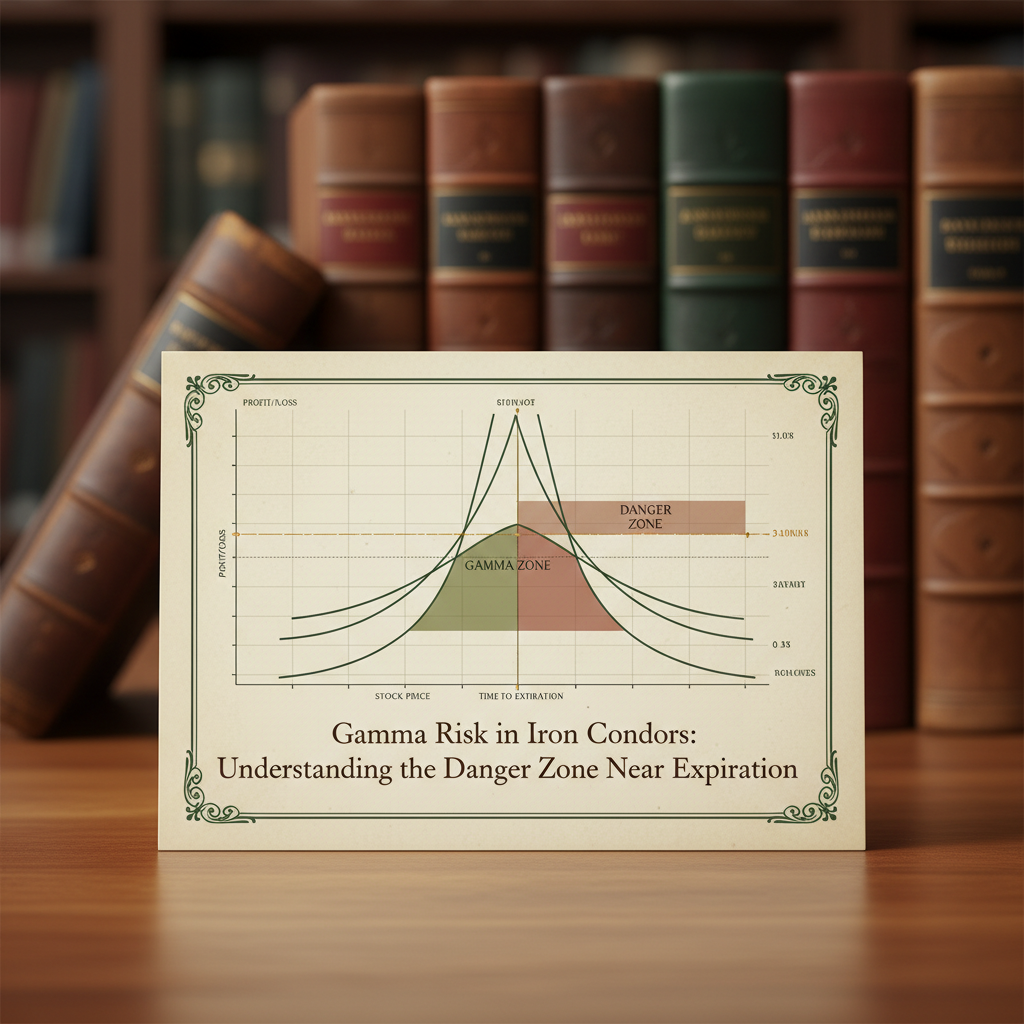
Gamma Risk in Iron Condors: Understanding the Danger Zone Near Expiration
Gamma Risk in Iron Condors: Understanding the Danger Zone Near Expiration As options traders, we often seek strategies that offer defined risk and a high probability of profit. The iron condor, a staple in many portfolios, perfectly embodies this philosophy. By selling out-of-the
Jan 1970
YOU MIGHT ALSO LIKE
Portfolio-Level Hedging for Iron Condor Traders: Using VIX Calls as Insurance
Portfolio-Level Hedging for Iron Condor Traders: Using VIX Calls as Insurance Portfolio-Level Hedging for Iron…
Read articleGamma Risk in Iron Condors: Understanding the Danger Zone Near Expiration
Gamma Risk in Iron Condors: Understanding the Danger Zone Near Expiration As options traders, we often seek st…
Read articleThe 50% Profit Target Rule: Why Closing Early Improves Your Long-Term Returns
The 50% Profit Target Rule: Why Closing Early Improves Your Long-Term Returns In the dynamic world of options…
Read articleThis article is for educational purposes only and does not constitute financial or investment advice. Options trading involves significant risk of loss and is not suitable for all investors. Past performance is not indicative of future results.