Calendar Spreads as a Complement to Iron Condors: Volatility Arbitrage Explained
Disclaimer: Options trading involves significant risk and is not suitable for all investors. The information provided in this article is for educational purposes only and does not constitute financial advice. Always consult with a qualified financial professional before making an
Abstract
Disclaimer: Options trading involves significant risk and is not suitable for all investors. The information provided in this article is for educational purposes only and does not constitute financial advice. Always consult with a qualified financial professional before making an
Disclaimer: Options trading involves significant risk and is not suitable for all investors. The information provided in this article is for educational purposes only and does not constitute financial advice. Always consult with a qualified financial professional before making any investment decisions.
Calendar Spreads as a Complement to Iron Condors: Volatility Arbitrage Explained
In the intricate world of options trading, strategies that capitalize on nuances in volatility and time decay are often the most rewarding for seasoned practitioners. While many traders are familiar with income-generating strategies like iron condors, fewer fully appreciate the sophisticated interplay of the volatility term structure. At Volatility Anomaly, we constantly seek to empower our community with advanced techniques that go beyond the basics, allowing for a more nuanced approach to market dynamics.
This article delves into the powerful synergy between calendar spreads and iron condors, illustrating how these seemingly disparate strategies can be combined to create a robust, multi-faceted approach to volatility arbitrage. We will explore how calendar spreads, often referred to as time spreads, are uniquely positioned to profit from shifts in the implied volatility curve, and how their inclusion can fortify an existing iron condor portfolio, offering both diversification and enhanced profit potential. By understanding the mechanics of calendar spreads, particularly their sensitivity to the volatility term structure, traders can unlock new dimensions of profitability and risk management, moving beyond simple directional or non-directional plays into the realm of sophisticated volatility trading.
Our goal is to provide a detailed, actionable guide, complete with real-world examples using specific tickers and market conditions, demonstrating how you can integrate these advanced concepts into your trading arsenal. We'll show you how to identify optimal entry points, manage positions effectively, and understand the critical role of implied volatility in shaping these strategies' outcomes. Prepare to elevate your options trading game by mastering the art of volatility arbitrage through calendar spreads.
The Evolving Landscape of Volatility: Why Term Structure Matters Now
The current market environment, characterized by persistent inflation concerns, geopolitical tensions, and an uncertain interest rate trajectory, has led to significant shifts in implied volatility. While the VIX index, a measure of 30-day implied volatility for the S&P 500, might appear moderate at levels like 15-18, a deeper look at the volatility term structure often reveals opportunities. The term structure, which plots implied volatility across different expiration dates, is rarely flat. It can be in contango (longer-dated options have higher IV) or backwardation (shorter-dated options have higher IV), and these states offer distinct advantages for specific strategies.
Traditional non-directional strategies like iron condors thrive in environments where implied volatility is high and expected to contract. They profit from time decay (theta) and the contraction of IV, typically selling options with 30-60 days to expiration. However, an iron condor is inherently short vega, meaning it loses money if implied volatility rises across all expirations. This is where calendar spreads offer a crucial complement.
Calendar spreads, by contrast, are typically long vega. They involve buying a longer-dated option and selling a shorter-dated option with the same strike price. This structure allows them to profit from an increase in implied volatility, particularly if the implied volatility of the longer-dated option increases more than the shorter-dated one, or if the term structure shifts favorably. Furthermore, they are excellent tools for exploiting discrepancies in the volatility term structure – a form of volatility arbitrage. For instance, if front-month implied volatility is suppressed relative to back-month volatility, a calendar spread can be an ideal way to capitalize on the expectation that this relationship will normalize.
Understanding and actively trading the volatility term structure is no longer an advanced luxury; it's a necessity for robust portfolio management. The market's current propensity for sudden shifts in sentiment means that relying solely on strategies that are short volatility can expose traders to significant tail risk. By incorporating calendar spreads, traders can build a more balanced portfolio, hedging against adverse volatility movements while simultaneously seeking out opportunities for volatility arbitrage within the term structure. This holistic approach is a cornerstone of the Volatility Anomaly methodology, emphasizing adaptability and a deep understanding of market mechanics.
Core Concept Deep Dive: Calendar Spreads and Volatility Arbitrage
A calendar spread, also known as a time spread, is an options strategy that involves simultaneously buying and selling options of the same type (call or put) and strike price, but with different expiration dates. The defining characteristic is that the longer-dated option is bought, and the shorter-dated option is sold. This makes it a debit spread, meaning you pay a net premium to enter the trade.
The Mechanics of a Long Calendar Spread
- Buy a longer-dated option: This option has more time value and is typically less sensitive to immediate price movements but more sensitive to changes in implied volatility.
- Sell a shorter-dated option: This option has less time value and decays faster. It also provides some premium to offset the cost of the longer-dated option.
- Same Strike Price: Both options share the same strike, which can be at-the-money (ATM), in-the-money (ITM), or out-of-the-money (OTM), depending on the trader's directional bias and volatility outlook.
The primary profit drivers for a calendar spread are:
- Time Decay (Theta): The shorter-dated option decays faster than the longer-dated option. As time passes, the value of the sold option erodes more quickly, benefiting the spread. This is a crucial distinction from a simple long option position.
- Implied Volatility (Vega): Calendar spreads are typically long vega. This means they profit if implied volatility increases, especially if the IV of the longer-dated option increases more than the shorter-dated one, or if the overall volatility curve shifts upward. This is the core of their volatility arbitrage potential.
- Underlying Price Movement: While often considered a non-directional strategy, calendar spreads perform best when the underlying asset's price remains near the chosen strike price at the expiration of the shorter-dated option. Significant moves away from the strike can reduce profitability.
Volatility Arbitrage through the Term Structure
The true power of calendar spreads lies in their ability to exploit the volatility term structure. Imagine the implied volatility curve as a landscape. Sometimes, the front month (e.g., 30 days out) is relatively cheap compared to the back month (e.g., 60 days out). This could be due to temporary market calm, or a belief that future volatility will be higher. A calendar spread allows you to "buy" this future volatility and "sell" the current, cheaper volatility.
"Volatility arbitrage with calendar spreads isn't about predicting the next big move; it's about identifying mispricings in the implied volatility curve and positioning yourself to profit as those mispricings correct."
Consider a scenario where the 30-day implied volatility for SPY is at 12%, but the 60-day implied volatility is at 15%. This is a contango structure, but with a steeper slope than usual, suggesting that longer-term uncertainty is priced higher. A trader could enter a calendar spread on SPY, buying the 60-day option and selling the 30-day option. If the 30-day IV rises to meet the 60-day IV, or if the entire curve shifts upwards, the long-dated option's value will increase more significantly than the short-dated option's decay, leading to profit.
Complementing Iron Condors
Iron condors are inherently short vega. They profit when implied volatility contracts. If you have an iron condor portfolio, a sudden spike in implied volatility can lead to significant losses. By adding calendar spreads, which are long vega, you create a more balanced portfolio. This is a classic example of hedging. If IV rises, your iron condors suffer, but your calendar spreads gain, offsetting some of the losses. If IV falls, your iron condors profit, while your calendar spreads might incur small losses, but the overall portfolio benefits from the iron condor's larger theta decay.
The beauty of this combination is that it allows you to profit from both sides of the volatility coin. You can still generate income from high IV through iron condors, while simultaneously positioning yourself for a potential IV expansion or term structure normalization with calendar spreads. This provides a more robust and adaptable strategy, particularly in uncertain market conditions.
Key Greeks for Calendar Spreads
- Theta (Time Decay): Positive for the spread. The short option decays faster than the long option.
- Vega (Volatility Sensitivity): Positive for the spread. Profits from an increase in IV. The longer-dated option has higher vega.
- Delta (Directional Sensitivity): Near zero for ATM calendars, but can be adjusted for a slight directional bias.
- Gamma (Rate of Delta Change): Negative for ATM calendars, meaning delta becomes more negative if the price falls and more positive if it rises, pushing the position away from the peak profit zone.
Understanding these Greeks is paramount for managing calendar spreads effectively. A Volatility Anomaly trader would use our proprietary tools to monitor the Greeks of their combined iron condor and calendar spread positions, ensuring the overall portfolio maintains a desired risk profile.
Practical Application: Building a Hybrid Volatility Portfolio
Let's walk through a concrete example of how to construct and manage a calendar spread, and then discuss its integration with an iron condor. We'll use a hypothetical scenario for a popular ETF like SPY.
Scenario: SPY with Moderate IV and Steep Contango
Assume the following market conditions for SPY (current price: $480):
- VIX: 16.5
- SPY Implied Volatility Rank (IVR): 35% (moderate)
- Volatility Term Structure:
- 30-day IV: 12%
- 60-day IV: 15%
- 90-day IV: 16%
The term structure shows a noticeable steepness between the 30-day and 60-day expirations. While the overall IVR is moderate, suggesting iron condors might not be optimal for new entries, the steep contango presents an opportunity for a calendar spread.
Step-by-Step Calendar Spread Entry (SPY)
We want to capitalize on the potential for the 30-day IV to rise or the overall curve to shift up. We'll choose an at-the-money (ATM) strike for maximum vega exposure and theta decay benefit.
Underlying: SPY (Current Price: $480)
Strategy: Long Call Calendar Spread
Entry Date: January 15th
Trade Details:
- Sell the February 15th (31 DTE) $480 Call Option:
- Premium: $5.50
- Implied Volatility: 12.0%
- Delta: 0.48
- Theta: -0.15
- Vega: 0.20
- Buy the March 15th (60 DTE) $480 Call Option:
- Premium: $8.50
- Implied Volatility: 15.0%
- Delta: 0.52
- Theta: -0.10
- Vega: 0.35
Net Debit: $8.50 - $5.50 = $3.00 (or $300 per contract)
Initial Greeks for the Calendar Spread (per contract):
- Net Delta: 0.52 - 0.48 = +0.04 (Slightly bullish, near neutral)
- Net Theta: -0.10 - (-0.15) = +0.05 (Profits $5 per day from time decay)
- Net Vega: 0.35 - 0.20 = +0.15 (Profits $15 for every 1% increase in IV)
This calendar spread is slightly bullish due to the higher delta of the longer-dated option, but its primary driver is positive theta and positive vega. It is designed to profit if SPY stays near $480 and/or if implied volatility increases.
Management and Exit (SPY Calendar Spread)
Scenario 1: Ideal Outcome (SPY stays near strike, IV rises)
Let's fast forward to February 10th (5 days before the short option expires). SPY is trading at $482. The VIX has risen to 18.0, and the implied volatility for the remaining 5-day options has spiked to 18%, while the March options (now 34 DTE) have seen their IV rise to 17%.
- February 15th $480 Call (5 DTE): Now worth $3.00 (IV 18%)
- March 15th $480 Call (34 DTE): Now worth $8.00 (IV 17%)
New Net Credit: $8.00 - $3.00 = $5.00
Profit: $5.00 (current value) - $3.00 (initial debit) = $2.00 (or $200 per contract)
At this point, with the short option nearing expiration, the trader might choose to close the entire spread for a profit. Alternatively, they could roll the short option to a new expiration, creating a "rolling calendar," if they believe the conditions remain favorable.
Scenario 2: Underlying Moves Significantly (SPY moves to $495)
If SPY moves significantly away from the strike, say to $495, the calendar spread will lose money. The delta will become more positive, but the gamma will work against the position, and the value of the ATM strike will diminish. This highlights the importance of the underlying staying near the strike. If SPY moves to $495, the $480 call options would be deep in the money, and the spread would become a long stock equivalent, losing its calendar characteristics.
Management: If SPY moves aggressively, a trader might consider adjusting the strike of the longer-dated option or closing the spread to cut losses, especially if the short option is still far from expiration.
Integrating with an Iron Condor Portfolio
Let's say you already have an iron condor portfolio on QQQ, capitalizing on its high IVR (e.g., 70%) and expecting IV contraction. A typical QQQ iron condor might be:
QQQ Iron Condor (45 DTE, current QQQ price $410):
- Sell $420 Call / Buy $425 Call (Credit $1.00)
- Sell $400 Put / Buy $395 Put (Credit $1.00)
Total Credit: $2.00 (Max Profit $200, Max Loss $300, Breakevens $398 and $422)
Greeks (per contract): Delta ~0, Theta +0.08, Vega -0.12
Notice the negative vega of the iron condor. If an unexpected market event causes a spike in volatility (e.g., VIX jumps from 16.5 to 25), your QQQ iron condor will likely show a loss due to its negative vega. However, your SPY calendar spread, with its positive vega of +0.15, would gain value, partially offsetting the loss from the iron condor. This creates a more balanced portfolio, less susceptible to sudden, broad-market volatility shocks.
The Volatility Anomaly system would allow you to monitor the aggregate vega of your entire portfolio. If your total portfolio vega is too negative, adding calendar spreads can help bring it closer to neutral or even slightly positive, providing a hedge against IV expansion. Our automated screener could identify tickers like SPY with attractive term structure setups for calendar spreads, even if their overall IVR isn't high enough for traditional iron condor entries.
Risk Management in Calendar Spreads
While calendar spreads offer compelling opportunities for volatility arbitrage and portfolio diversification, they are not without risks. Effective risk management is paramount for long-term success.
Key Risks
- Underlying Price Movement: The biggest risk to an ATM calendar spread is a significant move in the underlying asset's price away from the strike. The maximum profit occurs when the underlying closes exactly at the strike of the short option at its expiration. If the price moves too far in either direction, the spread can incur losses. For example, if SPY moves from $480 to $495, the $480 calls will be deep in the money, and the time value component of the spread diminishes, potentially leading to a loss.
- Implied Volatility Contraction: While calendars are long vega, if implied volatility contracts significantly, especially for the longer-dated option, the spread can lose money. This is less common if you enter when the term structure is steep, but it's a possibility.
- Gamma Risk: Calendar spreads, particularly ATM ones, have negative gamma. This means as the underlying price moves, the delta changes rapidly, pushing the position away from the peak profit zone. This requires active monitoring and potential adjustments.
- Time Decay (if IV falls): Although calendars are net positive theta, if IV drops significantly, the gain from theta might not be enough to offset the loss from vega.
- Early Assignment: While rare for calls, if the short call goes deep ITM, there's a risk of early assignment, especially if it's dividend-related. For puts, it's more common if the short put goes deep ITM.
Mitigation Strategies
- Strike Selection:
- ATM Calendars: Maximize vega and theta, but have the highest gamma risk. Best for underlying assets expected to remain range-bound near the strike.
- OTM Calendars: Can be used for a slight directional bias. Less gamma risk but also less vega sensitivity. They profit if the underlying moves to the strike by expiration.
- Position Sizing: Never allocate more than 1-2% of your trading capital to a single calendar spread. This limits the impact of an adverse move.
- Stop-Loss Orders: While options are complex, a mental stop-loss (e.g., close the spread if it loses 50% of the initial debit) can be effective. For our SPY example, if the spread value drops from $3.00 to $1.50, you might consider exiting.
- Active Management:
- Roll the Short Option: If the underlying stays near the strike as the short option approaches expiration, you can buy back the expiring short option and sell a new short option in the next monthly cycle. This "rolls" the calendar forward, extending its life and allowing it to continue profiting from theta and vega.
- Adjust Strikes: If the underlying moves significantly, you might consider closing the existing spread and opening a new calendar spread at a more relevant strike, or adjusting the strike of the long option if feasible.
- Convert to a Vertical Spread: If the underlying moves strongly in one direction and you believe it will continue, you could close the short option and hold the long option, or convert it into a vertical spread (e.g., if SPY goes to $490, you could sell a $495 call against your long $480 call to create a vertical spread).
- Diversification: Don't put all your capital into one calendar spread. Diversify across different tickers and potentially different strike types (ATM, OTM) to spread risk.
- Correlation with Iron Condors: When using calendars as a hedge for iron condors, ensure the underlying assets are correlated enough for the hedge to be effective, but not so correlated that they move in lockstep, negating the diversification benefit. For example, using SPY calendars to hedge QQQ iron condors is reasonable due to their high correlation.
At Volatility Anomaly, we emphasize continuous monitoring of your portfolio's aggregate Greeks. Our position monitoring tools allow traders to see their overall delta, theta, and vega exposure across all positions, enabling timely adjustments to maintain a desired risk profile. This proactive approach to risk management is crucial when deploying advanced strategies like calendar spreads.
Advanced Considerations for Experienced Traders
For those who have mastered the basics of calendar spreads, there are several advanced nuances that can further enhance their effectiveness and sophistication.
Diagonal Spreads: The Next Evolution
A diagonal spread is a variation of a calendar spread where the options have different strike prices and different expiration dates. For example, buying a longer-dated $100 call and selling a shorter-dated $105 call. This introduces a directional component while retaining the time decay and volatility characteristics of a calendar.
- Purpose: To express a more specific directional bias while still benefiting from time decay and potentially volatility. For instance, a bullish diagonal spread (buying a lower strike, longer-dated call and selling a higher strike, shorter-dated call) profits if the underlying moves up to the short strike by its expiration.
- Greeks: Diagonals have more complex Greek profiles. They will have a more pronounced delta, and their vega and theta interactions are more intricate, requiring a deeper understanding of options pricing models.
- Application: A trader might use a diagonal spread on AAPL if they expect a moderate price increase over the next month, but also want to capitalize on time decay. For example, buying the AAPL March $180 Call and selling the AAPL February $185 Call.
Volatility Skew and Smile
Implied volatility is not uniform across all strike prices for a given expiration. This phenomenon is known as the "volatility skew" or "volatility smile."
- Skew: For equities, out-of-the-money (OTM) puts typically have higher implied volatility than OTM calls or ATM options. This is due to demand for downside protection.
- Smile: For indices, both OTM puts and OTM calls can have higher IV than ATM options, creating a "smile" shape.
How to use it: Experienced traders can strategically place calendar spreads at strikes where the implied volatility is unusually high or low relative to its historical average or to other strikes. For example, if OTM calls on a particular stock are showing an unusually high IV (a "reverse skew"), a calendar spread using those OTM calls could be entered to sell the expensive short-dated IV and buy the cheaper, longer-dated IV, anticipating a normalization of the skew.
Leveraging Earnings and Event Volatility
Earnings announcements and other significant corporate events often lead to a temporary spike in front-month implied volatility, which then collapses rapidly after the event. This "IV crush" is a prime target for selling short-dated options.
However, a calendar spread can be used to capitalize on the IV crush while maintaining exposure to longer-term volatility. For example, a trader might sell a weekly option expiring just after an earnings announcement and buy a monthly option. The short option will experience significant IV crush, while the longer-dated option's IV might not be as affected, or might even rise if the market perceives the event as leading to future uncertainty. This is a very advanced technique and requires precise timing and careful risk management, as the underlying can move dramatically.
Synthetic Calendars and Risk Reversals
For highly experienced traders, synthetic calendars can be constructed using a combination of calls and puts to achieve similar risk profiles. For instance, a long call calendar can be synthetically replicated with a long put calendar and a long stock position, or through other combinations. This offers flexibility in managing delta and vega exposure.
Furthermore, combining calendar spreads with strategies like risk reversals (buying an OTM call and selling an OTM put, or vice-versa) can create highly customized volatility and directional exposures. For example, a bullish risk reversal combined with an ATM call calendar could provide a strong bullish bias with enhanced vega exposure.
These advanced techniques require a deep understanding of options theory, Greek sensitivities, and market microstructure. At Volatility Anomaly, our research pieces and weekly picks often delve into these sophisticated strategies, providing insights and actionable ideas for our most experienced members to integrate into their trading frameworks.
Conclusion & Key Takeaways
In an options trading landscape increasingly defined by dynamic volatility and intricate market structures, the ability to adapt and employ sophisticated strategies is paramount. Calendar spreads, often underutilized by the broader trading community, offer a powerful mechanism for volatility arbitrage and act as an invaluable complement to traditional income strategies like iron condors. By understanding and leveraging the volatility term structure, traders can move beyond simple directional bets and engage in a more nuanced form of market speculation, profiting from shifts in implied volatility and time decay.
Integrating calendar spreads into an iron condor portfolio creates a more robust, balanced, and adaptable strategy. It allows traders to generate income from high implied volatility environments while simultaneously hedging against unexpected volatility spikes, turning potential portfolio vulnerabilities into opportunities. This synergistic approach embodies the core philosophy of Volatility Anomaly: to empower traders with advanced, research-quality insights that lead to actionable, profitable strategies.
Mastering calendar spreads requires a keen eye on the Greeks, particularly vega and theta, and a disciplined approach to risk management. However, the rewards of understanding and applying these concepts can be substantial, transforming a reactive trading approach into a proactive, volatility-aware methodology.
Key Takeaways for Volatility Anomaly Traders:
- Calendar Spreads are Long Vega: They profit from increases in implied volatility, particularly the longer-dated option's IV. This makes them an excellent hedge for short-vega strategies like iron condors.
- Exploit Volatility Term Structure: Calendar spreads are ideal for volatility arbitrage, capitalizing on discrepancies or steepness in the implied volatility curve (e.g., when front-month IV is low relative to back-month IV).
- Complement Iron Condors: By combining long-vega calendar spreads with short-vega iron condors, traders create a more balanced portfolio, mitigating risk from sudden IV spikes while still generating income from time decay.
- Primary Profit Drivers: Calendar spreads profit from time decay (short option decays faster) and an increase in implied volatility. They perform best when the underlying stays near the chosen strike.
- Active Risk Management is Crucial: Monitor underlying price movement, IV changes, and gamma risk. Be prepared to adjust or roll positions as market conditions evolve.
- Consider Advanced Variations: For experienced traders, diagonal spreads, strategic use of volatility skew, and event-driven calendars offer further opportunities for sophisticated volatility trading.
- Utilize Volatility Anomaly Tools: Leverage our automated screeners to identify optimal term structure setups and our position monitoring tools to track aggregate portfolio Greeks, ensuring a balanced and well-managed approach to volatility arbitrage.
#VolatilityAnomaly · #IVRank · #OptionsTrading · #VRP
You Might Also Like
Volatility Anomaly
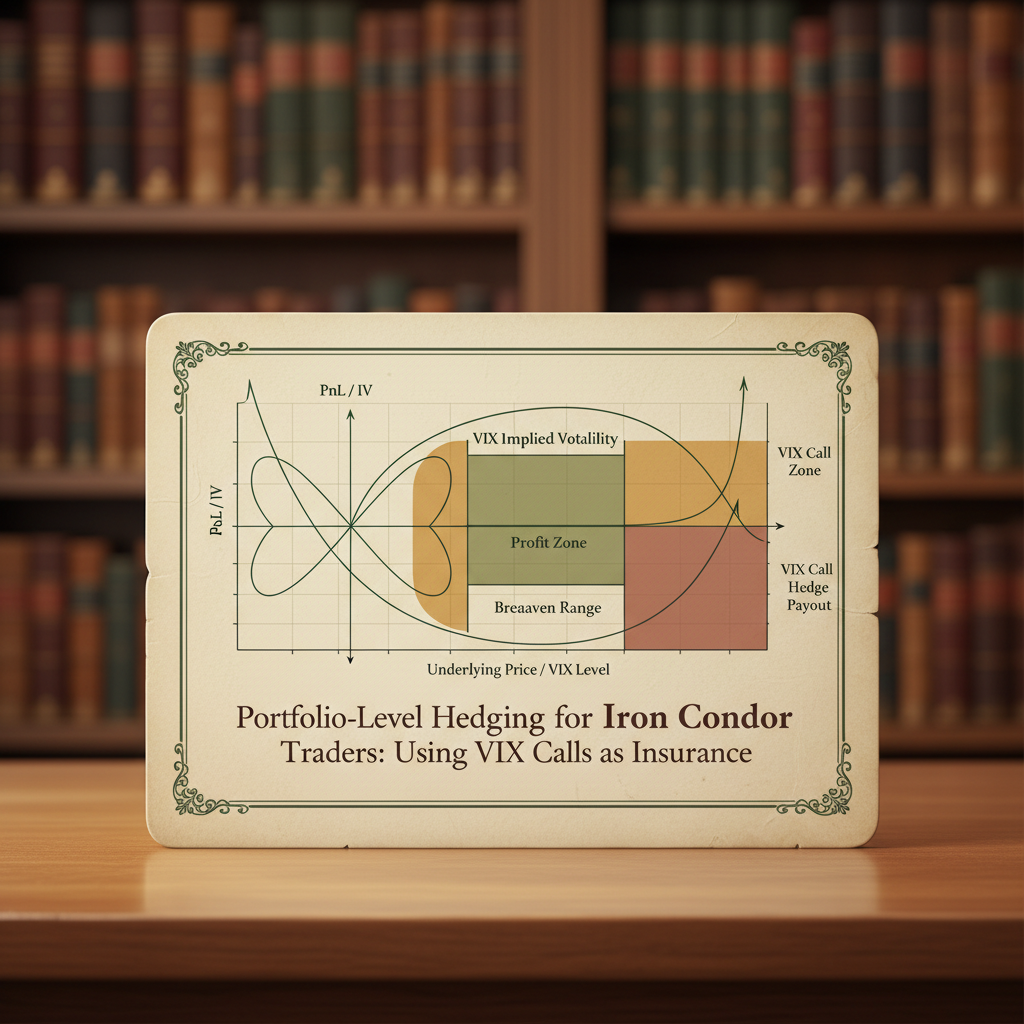
Portfolio-Level Hedging for Iron Condor Traders: Using VIX Calls as Insurance
Portfolio-Level Hedging for Iron Condor Traders: Using VIX Calls as Insurance Portfolio-Level Hedging for Iron Condor Traders: Using VIX Calls as Insurance In the world of options trading, strategies like the Iron Condor are highly popular for their ability to generate consistent
Jan 1970
Volatility Anomaly
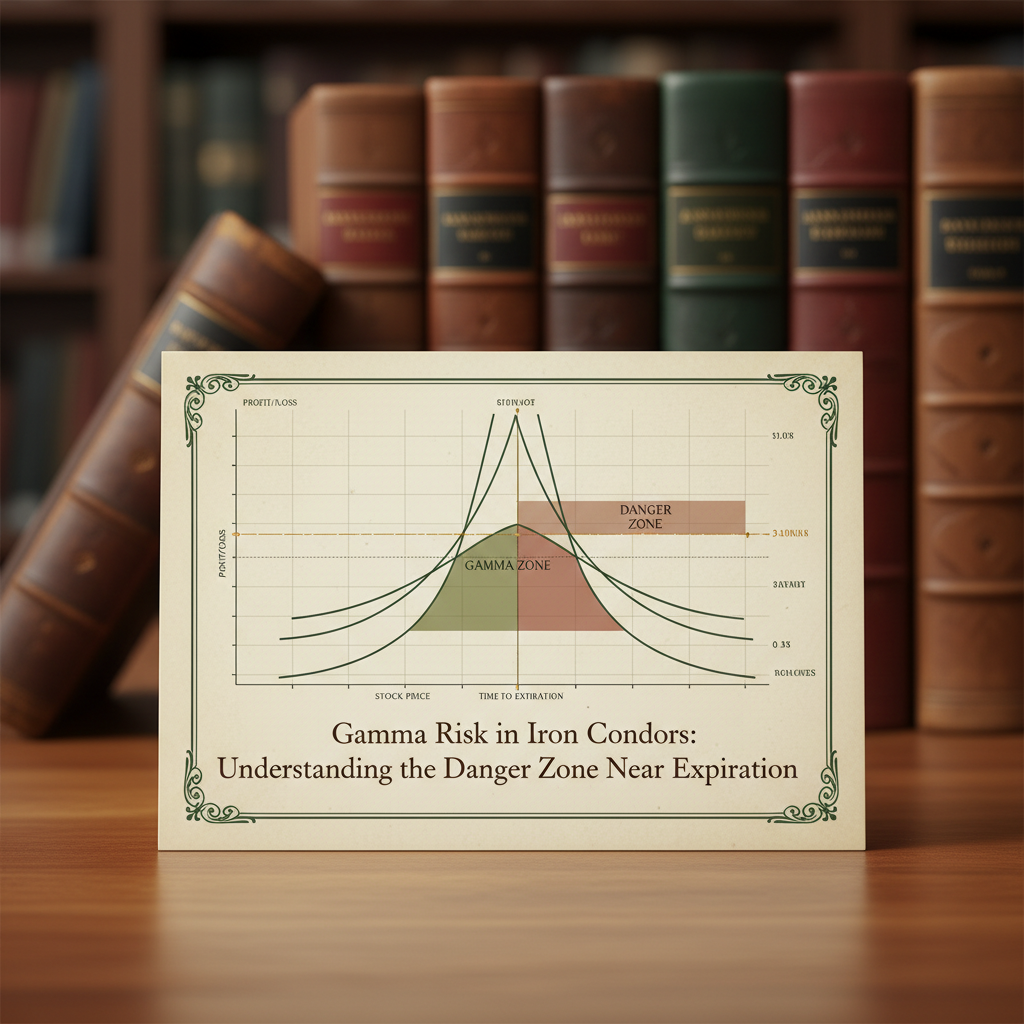
Gamma Risk in Iron Condors: Understanding the Danger Zone Near Expiration
Gamma Risk in Iron Condors: Understanding the Danger Zone Near Expiration As options traders, we often seek strategies that offer defined risk and a high probability of profit. The iron condor, a staple in many portfolios, perfectly embodies this philosophy. By selling out-of-the
Jan 1970
YOU MIGHT ALSO LIKE
Portfolio-Level Hedging for Iron Condor Traders: Using VIX Calls as Insurance
Portfolio-Level Hedging for Iron Condor Traders: Using VIX Calls as Insurance Portfolio-Level Hedging for Iron…
Read articleGamma Risk in Iron Condors: Understanding the Danger Zone Near Expiration
Gamma Risk in Iron Condors: Understanding the Danger Zone Near Expiration As options traders, we often seek st…
Read articleThe 50% Profit Target Rule: Why Closing Early Improves Your Long-Term Returns
The 50% Profit Target Rule: Why Closing Early Improves Your Long-Term Returns In the dynamic world of options…
Read articleThis article is for educational purposes only and does not constitute financial or investment advice. Options trading involves significant risk of loss and is not suitable for all investors. Past performance is not indicative of future results.